
Good project management doesn't require a big budget or a dedicated PM. It just requires the right habits and the right tools.
10 Project Management Tips for Small Businesses (That Actually Work)
Running a small business means wearing a lot of hats. You're the decision-maker, the salesperson, the support team, and somehow also expected to keep every project on track at the same time. It's a lot. And when things slip — a deadline missed, a task forgotten, a client left waiting — it rarely comes down to lack of effort. It usually comes down to lack of system.
The good news is that you don't need an enterprise-level project management setup or a dedicated project manager to run things smoothly. What you need are a few solid habits and the right lightweight tools. Here are ten project management tips that small business owners and their teams can start using immediately — no MBA required.
1. Write Everything Down — Immediately
This sounds almost too simple, but it's where most small teams fall apart. A task mentioned in a meeting, a request from a client call, a great idea discussed over coffee — if it doesn't get written down within minutes, there's a good chance it disappears. Human memory is not a reliable project management system.
Make it a rule: every task, request, or commitment gets captured immediately, in one place. It doesn't matter if it's a notebook, a shared document, or a task board — what matters is the habit of capturing before you forget.
2. Define What "Done" Looks Like Before You Start
One of the biggest time-wasters in small business projects is revisiting work that everyone thought was finished. The culprit is almost always a vague definition of done. "Update the website" means something different to you, your developer, and your client.
Before any task begins, spend two minutes writing down what the finished result looks like. What will exist that didn't exist before? What will have changed? What does the client need to approve? This tiny step eliminates a huge amount of back-and-forth later.
3. Visualize Your Work — Don't Just List It
A plain to-do list has one fatal flaw: it shows you everything that needs to be done, but nothing about where things actually stand. Is that task waiting on someone? Is it blocked? Has it even been started? You can't tell from a list.
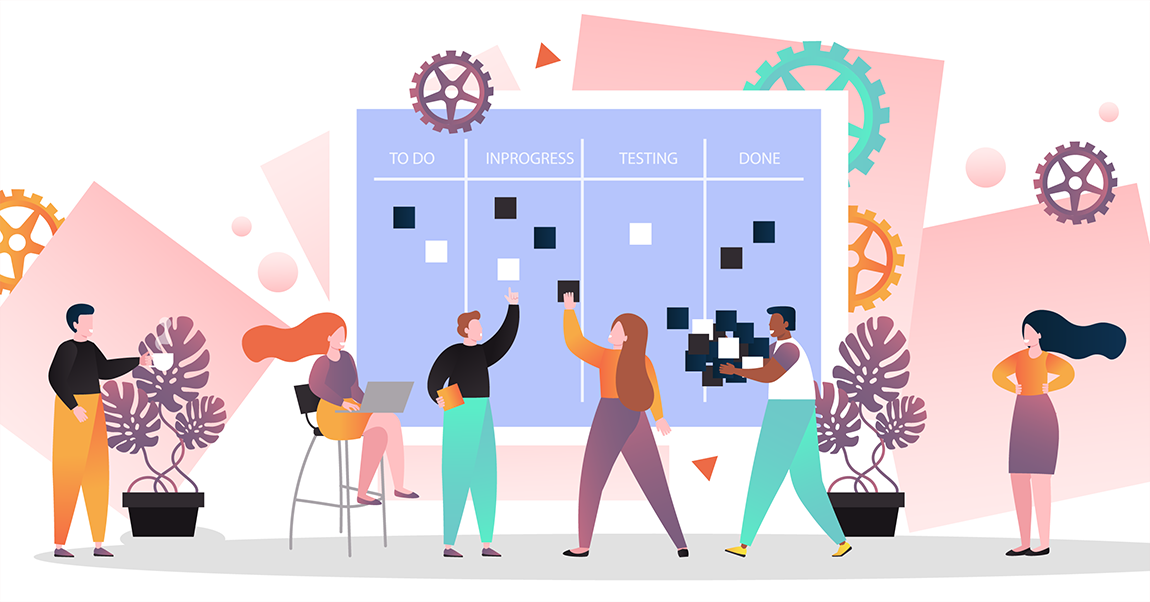
Switching to a visual task board — where tasks move through stages like To Do → In Progress → Done — gives you and your team an instant, shared picture of reality. You can see bottlenecks before they become crises, and you always know what everyone is working on without needing a status meeting.
A free project management tool like SimplyKanban makes this effortless. You set up a board in minutes, create cards for your tasks, and drag them across columns as work progresses. It's simple enough for a team of two and structured enough for a team of twenty.
4. Stop Multitasking — Seriously
Multitasking feels productive. It isn't. Research consistently shows that switching between tasks comes with a cognitive cost — your brain takes time to refocus every time you jump to something new. For knowledge work like writing, planning, or problem-solving, that cost is significant.
A practical fix: limit how many tasks are actively "in progress" at any one time, both for yourself and for your team. The Kanban methodology calls this a WIP limit (Work In Progress limit). Try capping it at two or three active tasks per person. You'll find that things actually get finished faster, because focus beats multitasking every time.
5. Break Big Projects Into Small, Actionable Steps
A task like "launch the new product" is not a task — it's a project. When something that large sits on your list, it's easy to avoid it because it's not clear where to start. Break it down into the smallest possible actions: write the product description, set up the product page, prepare the email announcement, schedule the social media posts. Each of those is a real, doable task.
Smaller tasks also give you momentum. Completing things — even small things — creates a sense of progress that keeps your team motivated and moving forward.
6. Assign Every Task to One Person
In small teams, it's tempting to assign tasks to "the team" or assume that shared responsibility means everyone will pitch in. In practice, shared responsibility often means no one takes ownership, and things fall through the cracks.
Every task should have exactly one person accountable for it — not two, not the whole team. That person doesn't have to do it alone, but they are responsible for making sure it gets done. This single rule eliminates a surprising amount of confusion and dropped balls.
7. Set Deadlines That Mean Something
Every task having a deadline is obvious advice. But the less obvious part is: your deadlines need to mean something. If deadlines regularly slip without consequence or discussion, they stop being deadlines and start being suggestions. Your team learns to treat them accordingly.
When a deadline is at risk, address it early — not the day it's due. Build a brief check-in into your week (even just 15 minutes) where you look at what's due soon and flag anything that needs attention. Catching problems three days early is infinitely easier than managing a crisis on the due date.
8. Keep Your Communication in Context
One of the most underrated sources of chaos in small business projects is scattered communication. Decisions made in email, updates given in Slack, questions asked in a WhatsApp group — and then nobody can find any of it when they need to. You end up having the same conversation three times.
Where possible, keep communication attached to the work it's about. If you're using a task board, add comments and updates directly to the relevant task card. That way, anyone who picks up that task later has the full context — no digging through chat histories required.
9. Do a Quick Weekly Review
Once a week — Friday afternoon or Monday morning both work well — spend 20 to 30 minutes reviewing your projects. What got done this week? What's carrying over? What's coming up next week that needs preparation? Are there any tasks that have been sitting still for too long?
This habit keeps you from being constantly reactive. Instead of only noticing problems when they explode, you catch them while they're still small. It also gives you a moment to feel good about what was actually accomplished — something small business owners rarely pause to do.
If your team uses a visual task board, this review takes almost no time. You can see the whole picture at a glance, spot anything stuck in "In Progress" for too long, and make decisions about priorities for the week ahead. If you haven't set one up yet, creating a free account on SimplyKanban takes about two minutes — you could have your first board ready before the end of today.
10. Choose Simple Tools and Actually Use Them
There's a trap that a lot of small business owners fall into: spending more time researching and setting up project management tools than actually managing projects. The perfect tool that never gets used is worth nothing. A simple tool that everyone actually uses every day is worth everything.
Resist the urge to adopt complicated systems with dozens of features your team will never touch. Start simple. A visual task board with a few columns, cards for each task, and clear ownership is enough to transform how a small team operates. You can always add complexity later — but simplicity is usually where you stay.
If your team already has a system in place, keep going. If you're still figuring it out, give SimplyKanban a try — it's free, requires no training, and your whole team can be on board within the hour.
The Bottom Line
Good project management in a small business isn't about following a rigid methodology or investing in expensive software. It's about building a handful of consistent habits: capturing tasks, clarifying expectations, visualizing work, communicating clearly, and reviewing progress regularly. Do those things well, and you'll be ahead of most teams — big or small.
The tools help, but the habits are what make the difference. Start with one or two tips from this list, get comfortable, and build from there. Small improvements compound quickly, and a few months from now your team will barely recognize how chaotic things used to feel.
And if you're looking for a custom web application to take your business operations to the next level — beyond task management — get in touch with Norn Technologies. We build tailored solutions that fit exactly how your business works.